Download the
Paisabazaar app Today!
Paisabazaar app Today!
Get instant access to loans, credit cards, and financial tools — all in one place

Win Assured Cashback

Our Advisors are available 7 days a week, 9:30 am - 6:30 pm to assist you with the best offers or help resolve any queries.


Get instant access to loans, credit cards, and financial tools — all in one place

Scan to download on



 Personal Loan
 Business Loan
 Home Loan
 Other Loans


Our Advisors are available 7 days a week, 9:30 am - 6:30 pm to assist you with the best offers or help resolve any queries.

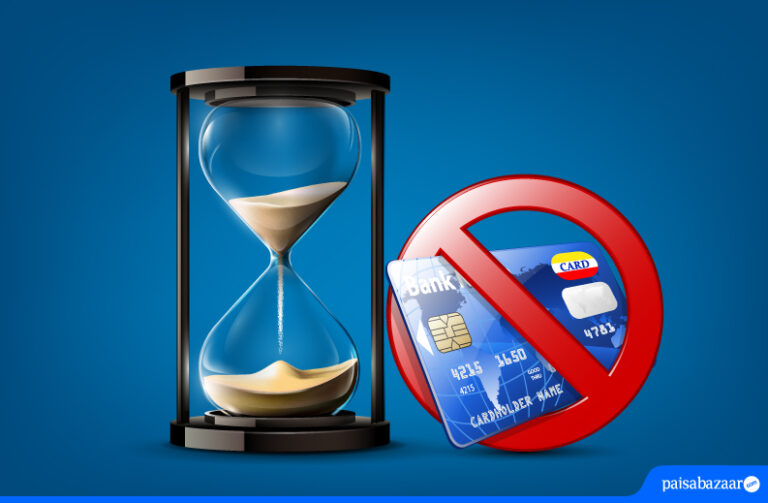
A credit card is a great financial tool that helps you manage your finances, earn rewards, build credit and more. But what happens when due to certain reasons or for financial stability, you decide to limit your credit card spending? On one hand, putting a limit on your spending and not using your credit card can be a good way to avoid overspending but it is significant to understand what inactivity does to your credit card?
Exclusive Card Offers from India’s top banks are just a click away
Error: Please enter a valid number
Credit card inactivity is the non-usage of credit card for an extended period of time. When the duration crosses a specific period, the credit card is deactivated by the provider company. The duration of dormancy for deactivation may vary from one provider to another. Generally, card issuers deactivate a credit card after six months of dormancy but this is not the case for every card.
Suggested read: Best Credit Cards in India | Check Eligibility for Top Cards
There is no specific time period for which an issuer waits before deactivating an inactive credit card. It varies from one issuer to another. Some issuers deactivate a credit card after 6 months of dormancy while some after 12. However, there are instances where the issuer might allow a longer time of inactivity before deactivating your card.
Note that, an issuer does not deactivate credit cards quickly. Deactivating a credit card account would mean a loss in business. So an issuer might give the required time even after an extended period of dormancy. However, a time comes when the cost incurred by the issuer goes beyond the revenue generated from it. In such cases, the issuer decides to deactivate your credit card.
Also, as per the new RBI guidelines, if you do not activate your new credit card within 30 days of card issuance, the card issuer needs to seek consent from you to activate your card through an OTP-based process. However, in case you do not provide the consent, the card issuer has to close your credit account within 7 days of seeking consent from you.
Also read: What happens when you don’t activate your credit card | How New RBI Rules Are Making Credit Cards Safer?
It is not the case that only the issuer/provider can deactivate your credit card, you can also get your credit card deactivated if in case you face any of the below-mentioned situations:
| No other credit card for balance transfer? Worry not & Apply for a Credit Card now! |
If you have requested your card issuer to close your account, then your issuer has to resolve your query within 7 working days, (provided there is no outstanding balance). In case the card issuer does not complete the process of closure within 7 working days, it shall result in a penalty of Rs. 500 per day of delay payable to you, till the closure of the account.
There are a number of reasons for using your credit card frequently. Some of them are mentioned below:
Suggested read: Benefits of Using a Credit Card | Check Eligibility for Top Cards
What Inactivity Does to Your Credit Score?
Your credit card comes with a credit limit and when you make any transaction using your credit card, your credit limit is blocked for that amount. The ratio of used limit to the total available limit is known as Credit Utilization Ratio (CUR). It is recommended to keep your credit utilization ratio as low as possible, as a higher CUR makes you look credit hungry.
When you close a credit card account or it gets deactivated, your credit limit for that card gets reduced from your overall credit limit which in turn increases your overall credit utilization ratio. If the overall ratio goes beyond 70%, your credit score might get impacted.
You can prevent your credit card from deactivation by following some of the simple tips mentioned below:
Read about how to maximize the benefits of your credit card and check your eligibility!
In case your credit card is deactivated due to dormancy, you should take the steps mentioned below to prevent any altercations in future:
Contact the issuer for reactivation: A simple follow up by you can sometimes lead to reactivation of the credit card. However, you can send a written request to the issuer to reactivate your credit card mentioning that you have always made the payments on time and have a good credit history.
Check your credit score: If the limit of your deactivated credit card was pretty high, your credit score may take a deep plunge owing to the increase in your overall credit utilization ratio. Check whether your credit score is least impacted and if there is a considerable drop in your score, you can take corrective measures to rebuild your credit score.
Monitor your credit report for closure: Do monitor your credit report every month to ensure that your credit card account is closed in the report as well and there is no outstanding bill on the account.
It is never recommended to get your credit card deactivated especially when it is your first credit account as it is said that “the longer your credit history, and older your average account, the more reliable you look”. However, if your credit card is of not of much use to you, you can get it deactivated on your own as well. Outside of the credit score implications, the involuntary closure of a credit card could lead to unused reward points attached to your card being forfeited.
Suggested read: Best Cashback Credit Cards | Best Rewards Credit Cards | Best Shopping Credit Cards

 Limited Time Offer


 with Every Card
Choose a Card Matching Your Lifestyle
Please enter a valid full name
 +91
+91
The entered number doesn't seem to be correct
