


Bonds are fixed income instruments, which the governments and entities issue to raise money for financing their projects, expenditures and other activities. In this, the investor purchasing bonds in India basically lends money to the bond-issuing entity. In return, the entity pays interest at periodical intervals (typically monthly/quarterly). When the bond reaches its maturity date, the bondholder gets back the principal value (face value) of the bond. Thus, bondholders can be considered as creditors for the bond issuers.
BondsWhat are BondsWhy Invest in BondsBonds Interest RatesTypes of BondsHow are Bonds Rated ?Benefits of Investing in BondsThings to Consider before Investing in BondsPaisabazaar in NewsFAQs
Invest in Bonds Online

High returns
Earn fixed returns of up to 13.50%

Low investment
Start investing with as little as ₹1,000

Low risk
Invest in AAA–BBB rated bonds

No brokerage
0% brokerage or commission fees
4.5/5
15.7L Reviews
6cr+Satisfied Customers
₹3,064 CrsInvestment Enabled
100+Bonds
Invest as Low as ₹1000 & Getup to 13.50% Returns

High returns
Earn fixed returns of up to 13.50%

Low investment
Start investing with as little as ₹1,000

Low risk
Invest in AAA–BBB rated bonds

No brokerage
0% brokerage or commission fees
4.5/5
15.7L Reviews
6cr+Satisfied Customers
₹3,064 CrsInvestment Enabled
100+Bonds
Explore Bonds by Category
High Yield


CRISIL BBB-
You Invest
₹9,835
Returns (YTM)

14%
You Get
₹11,274
Today
14 months
Unifinz Capital
You Invest
₹9,835
Returns (YTM)
14%
You Get
₹11,274
Today
14 months
Unifinz Capital
CRISIL BBB-


Acuite BBB+
You Invest
₹99,864
Returns (YTM)
13.75%
You Get
₹1,14,589
Today
14 months
Akara
You Invest
₹99,864
Returns (YTM)
13.75%
You Get
₹1,14,589
Today
14 months
Akara
Acuite BBB+

ICRA BBB-
You Invest
₹9,819
Returns (YTM)
13.75%
You Get
₹11,961
Today
23 months
Orange Retail Finance
You Invest
₹9,819
Returns (YTM)
13.75%
You Get
₹11,961
Today
23 months
Orange Retail Finance
ICRA BBB-
What are Bonds in India?
How to Buy Bonds through Paisabazaar?
Get up to 13.50% from bonds in 5 simple steps
Step 1: Login to your Paisabazaar account
Step 2: Select the Bonds
Step 3: Complete the KYC process
Step 4: Enter bank details
Step 5: Link your demat account
Types of Bonds in India

Corporate Bonds
Listed public sector and private sector companies issue corporate bonds online for financing their operations, expansion, debt consolidations, etc.

Central Government Bonds
Central government issues these bonds for tenures of 5 to 40 years with their interest payments at half yearly intervals.

Zero Coupon Bonds
Zero Coupon Bonds do not offer any coupon (interest) payments to investors.

Capital Gains Bonds
These bonds help individuals and Hindu Undivided Families (HUFs) save on Long-Term Capital Gains (LTCG) tax liability arising from the sale or transfer of their land or building.

Floating Rate Bonds
The interest or coupon payments of these bonds are linked to predetermined benchmark rates, which if changes could also change the bond’s coupon rate.

State Development Loans (SDL)
State governments in India issue State Development Loans (SDLs). They are almost as secure as Central Government Bonds.

Municipal Bonds
Urban local bodies issue municipal bonds in India to raise money for financing various development projects.

Convertible Bonds
These bonds can be converted into shares after a specified period, either at the current market price or at a price pre-determined at the time of the bond issue.

Callable Bonds
In these bonds, issuers have the right to buy back these bonds before their maturity dates.
Bonds Interest Rates in India
Bonds interest rate is the interest rate a bond issuer promises to pay on a bond’s face value. More simply, it is the amount bondholders receive periodically on their bond investment. So, let's say if a bond has a face value of Rs 100 and a interest rate of 8.24%, then the annual coupon (interest earnings) would be Rs. 8.24.
Based on coupon rate, bonds are categorised as fixed rate bond and floating rate bonds. In case of fixed rate bonds, the interest payments remain fixed or unchanged till the bond's maturity date. However, in case of floating rate bonds, the coupon rate is reset at predefined intervals and is based on a pre-specified market-based interest rate. Thus, interest payments may vary during the bond tenure.
Why Invest in Bonds Online through Paisabazaar?

High Returns
Earn fixed returns of up to 13.50%.

Low Risk
Invest in a range of highly rated (AAA-BBB) corporate bonds.

Flexible Payout
Get fixed returns credited in your demat linked bank account every month/ quarter.

Low Investment
Start investing with as little as Rs. 1,000.

Safety & Security
Invest in SEBI-regulated senior secured bonds to enjoy higher claim priority over shareholders in case of default or liquidation.

Sell Anytime
Sell bonds anytime through Paisabazaar.

Transparency
Real-time price discovery and assured transaction.

No brokerage/commission
Invest without paying brokerage or commission fee.

End-to-end digital process
Enjoy seamless end-to-end digital process.

Bonds Video Tutorials


People also search for
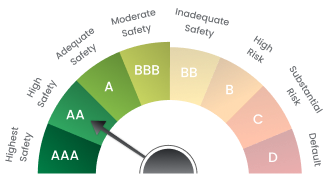
How are Bonds Rated in India?
6 Benefits of Investing in Bonds in India
Bonds offer several key benefits, including steady income generation, capital preservation, and portfolio diversification, making them a cornerstone of a balanced investment strategy. Below are the mentioned top 6 reasons to invest in Bonds online with Paisabazaar:

Steady Income Stream:
Bonds usually offer fixed interest at regular intervals, providing investors a steady income stream.


Capital Preservation:
The principal of bonds is repaid at maturity, making them ideal for those seeking capital protection amid market volatility.


Diversification:
Investing in bonds can offset the risks associated with more volatile assets like stocks.


Lower Volatility:
Bonds usually show lower price volatility than stocks, offering stability to risk-averse investors.


Predictable Returns:
Bonds offer fixed interest and guarantee to return the principal at maturity, helping investors estimate their future returns and plan their finances in advance.


Potential for Capital Gains:
Investors usually hold bonds for income, however, they can also provide profits if they are sold at higher prices before maturity.

Things to Consider before Investing in Bonds Online (2026 Checklist)
Here are a few points that investors should consider before buying & investing in bonds in India:

Paisabazaar Bonds in News
Bond Market Latest News
India’s first blue bond issue planned by Sagarmala Finance - September 22
Sagarmala Finance Corporation plans to raise funds through what is being described as India’s first blue bond issue, scheduled for September 28. Blue bonds are designed to finance projects linked to marine and water-related activities, adding a new segment to India’s sustainable finance market.
Reliance Industries may raise ₹12,500 crore through bonds - September 9
Reliance Industries is reportedly preparing to raise around ₹12,500 crore through domestic bonds, potentially making it the largest bond deal by a listed Indian company in the domestic market this year. The issue could come as early as next week.
Canara Bank and Bank of Maharashtra plan $1 billion in dollar bonds - September 9
Canara Bank and Bank of Maharashtra are planning to raise $500 million each through US-dollar-denominated bonds. The proposed bonds could have three- or five-year maturities and would be issued under the RBI's concessional swap window, which helps reduce the cost of hedging currency risk.
Indian Government Bonds Slump in Nearly a Month as Middle East Oil Risks Rise - 20 July, 2026
The 10-year Indian government bond experienced a significant decline in nearly a month due to rising U.S.-Iran tensions, which pushed oil prices higher, hurting the Indian rupee and prompting traders to cut their positions in government bonds. As India imports most of its oil, higher crude prices strain India's import bill and government finances. Foreign investor demand for Indian debt is expected to moderate following recent inflows.
RBI absorbs over ₹6 lakh crore from banking system - September 7, 2026
The RBI conducted liquidity-absorption operations and took more than ₹6 lakh crore out of the banking system. Around ₹3.53 lakh crore was absorbed through an overnight operation and ₹2.59 lakh crore through a 30-day operation. In simple terms, the RBI is temporarily taking excess money away from banks. This could affect short-term interest rates and remains an important factor for the bond market this week.
Sammaan Capital considers Tier I and Tier II debt fundraising - September 7
Sammaan Capital is considering continuing its authorisation to raise funds through Tier I and Tier II debt instruments. The company's board is reviewing the proposal as part of its broader funding plans.
If approved and subsequently issued, these instruments would allow the company to raise additional capital from the debt market.
Emkay Global allots ₹50 crore NCDs at 11.50% - September 7
Emkay Global Financial Services allotted ₹50 crore worth of non-convertible debentures (NCDs) carrying an 11.50% coupon rate. The development adds to the week's corporate debt-market activity.
For investors, the announcement is relevant because NCDs are fixed-income instruments that can offer regular interest income, although returns come with issuer and market-related risks.
How to Buy Bonds through Paisabazaar?
Get up to 13.50% from bonds in 5 simple steps
Step 1: Login to your Paisabazaar account
Step 2: Select the Bonds
Step 3: Complete the KYC process
Step 4: Enter bank details
Step 5: Link your demat account
FAQs
What is a senior secured bond?
Senior secured bonds are a type of secured bonds that are senior in capital structure. In addition to being backed by collateral, these bonds receive higher priority in receiving repayments over sub-ordinated or junior secured bondholders, if and when the issuer defaults.
Who assigns bond ratings in India?
The following SEBI-recognised credit rating agencies rate bonds based on its issuer's financial health: Acer Credit Rating Pvt. Ltd. Acuite Ratings & Research Ltd. Brickwork Ratings India Pvt. Ltd. CARE Ratings Ltd. CRISIL Ratings Ltd. ICRA Ltd. India Ratings and Research Pvt. Ltd. (formerly Fitch Ratings India Pvt. Ltd.) Infomerics Valuation and Rating Pvt. Ltd.
What are corporate bonds in India?
Corporate bonds are debt instruments issued by public sector and private sector companies to raise money for financing their operations, expansion, debt consolidations, etc. When you invest in a corporate bond online, you basically lend money to the bond issuing company, which in return pays fixed periodic interest payments with a promise to repay the principal amount on its maturity date.
What are government bonds in India?
Government bonds are issued by the central government to raise funds for financing their spending and other obligations. These bonds are usually issued for tenures ranging from 5 to 40 years and make interest payments on a half-yearly basis. Being backed by sovereign guarantee, government bonds are considered among the safest investment options in India.
What happens to my bonds if the issuer defaults?
When a bond issuer defaults on its repayments, the chances of recovering the obligated sum would depend on whether the bond is secured and its status in the capital structure. Senior secured bondholders receive the highest priority in receiving repayments, giving them the highest level of protection. Sub-ordinated or junior secured bondholders receive the second highest priority followed by unsecured bondholders.
Are bond returns affected by stock market fluctuations?
Stock market fluctuations do not directly affect the bond returns. Bonds usually pay fixed interest payout until their maturity dates. However, factors like prevailing interest rate cycles, systemic liquidity, macro-economic conditions, etc. may impact both bond markets and equity markets, often with opposite impacts.
How are bonds taxed in India?
The interest earned on bonds in India is fully taxable as per the individual's income tax slab, barring a few exceptions such as in case of tax-free bonds issued by REC, PFC, etc. if you sell bonds on maturity, capital gains tax applies based on the holding period and whether the bond is listed or unlisted.
How are bonds valued?
The valuation of a bond depends on various parameters such as coupon rate, prevailing market interest rates, residual tenure, issuer’s credit rating, etc.
When to invest in bonds in India?
Individuals should invest in bonds online with Paisabazaar when they want lower risk and stable income, especially during the periods of market volatility or high interest rates. Check out the complete guide on How to Invest in Bonds Online
Where to buy bonds in India?
Bonds can be bought through primary and secondary markets, which includes stock exchanges, online bond platforms like Paisabazaar, banks and financial institutions.
Bonds Articles

How to Choose Between Fixed & Floating Rate Bonds

Bhumika Khandelwal20 May 2026

How to Check Bond Credit Rating

Bhumika Khandelwal13 May 2026

How to Buy Corporate Bonds Online
Bhumika Khandelwal21 Apr 2026

NRI Bonds for USA: How NRIs Living in the US Can Invest in Indian Bonds

Sourabh Kumar14 Apr 2026
How NRIs Can Invest in Corporate Bonds

Paisabazaar31 Mar 2026

Digital Gold vs SGB
Bhumika Khandelwal10 Mar 2026

Bonds vs Mutual Funds – Which Investment Option is Right for You?
Paisabazaar25 Feb 2026

Sovereign Gold Bond vs Gold ETF – Which is Better?
Bhumika Khandelwal24 Feb 2026

Convertible Bond vs Non-Convertible Bonds
Bhumika Khandelwal13 Feb 2026

How to Invest in Government Bonds

Vandana Punj12 Feb 2026


Written By
Vandana Punj
Reviewed By
Shamik Ghosh
Check Top Bond Offers with Assured Returns of up to 13.50%
Disclaimer
Paisabazaar is a loan aggregator and is authorized to provide services on behalf of its partners
*Applicable for selected customers