Download the
Paisabazaar app Today!
Paisabazaar app Today!
Get instant access to loans, credit cards, and financial tools — all in one place

Get the app — instant card and loan offers!

Our Advisors are available 7 days a week, 9:30 am - 6:30 pm to assist you with the best offers or help resolve any queries.

Get instant access to loans, credit cards, and financial tools — all in one place

Scan to download on


 Personal Loan
 Business Loan
 Home Loan
 Other Loans


Our Advisors are available 7 days a week, 9:30 am - 6:30 pm to assist you with the best offers or help resolve any queries.

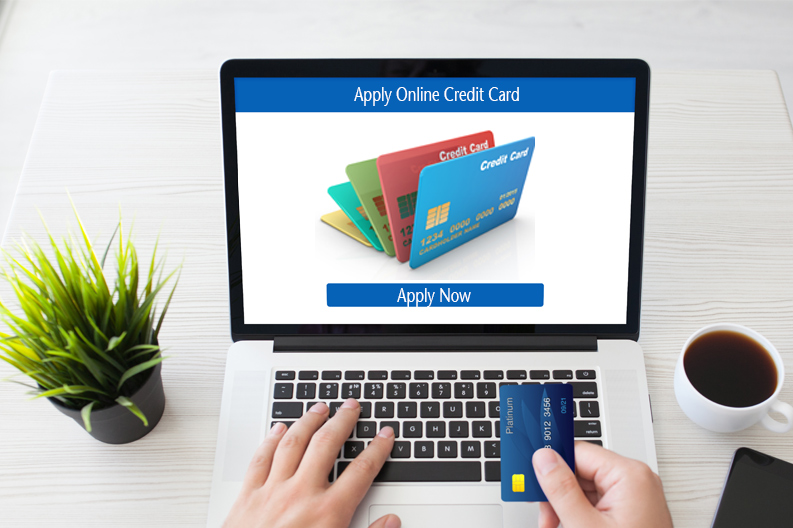
Applying for your first credit card can be a daunting task. After all, there are hundreds of credit cards available in the market and numerous terrifying stories about misusing them. However, credit cards are powerful financial tools that not only help you to build a strong credit history but if used rationally they can benefit you in numerous ways. If you are taking the initial step toward applying for your first credit card, here are a few important things to remember.
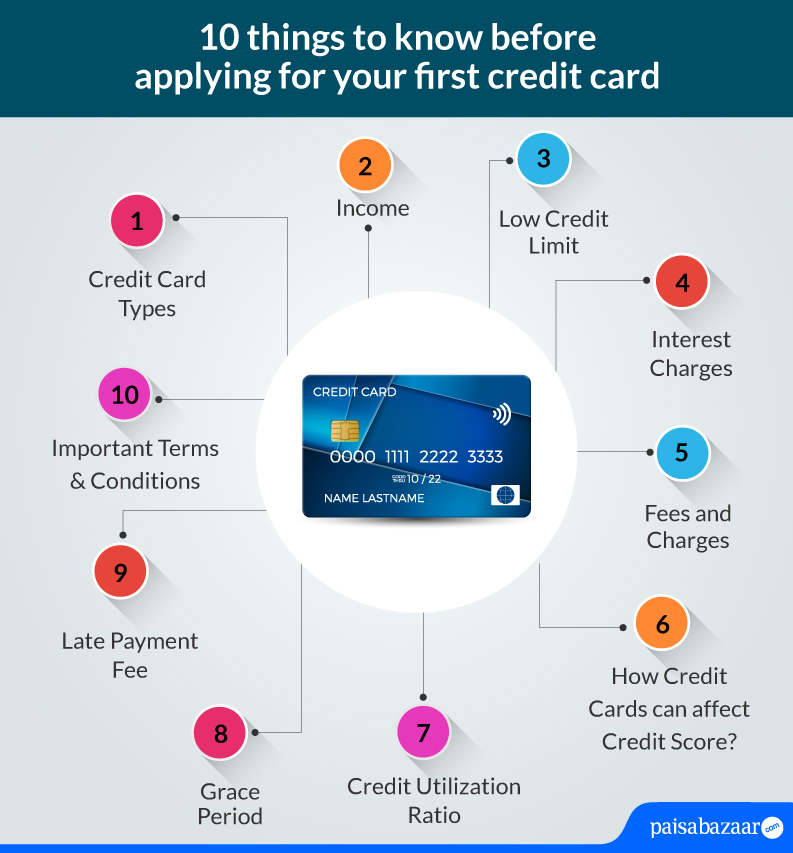
1. Types of Credit Card
It is very important for you to know the different types of credit cards in India. For example, if you are new to credit cards, you can opt for a beginner-level credit card with a low annual fee. Moreover, you can choose a credit card that suits your needs and requirement such as travel credit, shopping credit card, cashback credit card, fuel credit card, etc.
Know More>> Best Credit Cards in India 2025
The credit card issuers will ask for your income information in order to check your repayment capacity. Your income plays an important role while applying for a credit card. This is proof to the issuer that you will be able to pay your credit card bill. The card choices evidently increases with the increase in your income bracket.
Initially, the credit card issuers will often provide you with a low credit limit to minimize the risk. Once you get accustomed to managing your credit card, the issuers themselves will provide you with the option of increasing your credit limit. Also, the credit limit is linked with your income so if you are a low-wage earner your credit limit may be limited by your earnings.
It is important to know about all the terms and conditions as they contain information you agree to when you use the card. Do read about the card’s APR range, the applicable fees, how rewards work, and all the other significant details. Also, take proper time to read the fine print in the terms and conditions.
In case you repay your credit card balance timely and in full, you will clearly be using the bank’s money for free as you need not pay any interest charges. But if you carry the balance from one month to the next, you will be charged interest on the balance in accordance with your card’s APR (Annual Percentage Rate). The APR usually ranges from 30to 40%.
A grace period is a time during which the issuer doesn’t charge any interest on the purchases made if you pay off the new balance in full and before the payment due date. The grace period starts from the end of the billing cycle to the next payment due date. If in case you lose the grace period by not paying your balance in full before the due date, you will be charged interest on the unpaid balance.
Make sure you check all the important fees and charges related to the card. The things you need to keep a check on include joining fee, annual fee, finance charges, transfer fees, cash advance charges, foreign transaction fees, over-limit fees and more. Make sure you know all these numbers before you get burdened with unexpected charges.
You need to know about the fee you can incur on paying off your balance later than the supposed payment due date. In case if you pay late you can not only incur extra charges but the creditors can report your late payment to the credit bureaus which in turn can damage your credit history and lower your credit score.
It is significant to keep a check on how much you are spending irrespective of your credit limit. The credit utilization ratio also affects your overall credit health hence a higher utilization ratio cannot be considered good even if your repayment history is decent. In case if you use more than 30-40% of your card availability, your credit score will be lowered because you will become a bigger risk in terms of repaying your card balances.
The credit card impacts your credit score as it defines your financial decisions and management of debt. If you overcharge your credit card by spending beyond the given credit limit, credit cards can have a bad impact on your credit score.
Applying for the first credit card on one hand is a huge milestone but on the other is a not that easy task to go with. You need to completely understand how a credit card actually works and carefully read all the terms and conditions related to it. Understanding the odds and possibilities before opting for one can help you save money as well as can help in building a good credit score.

