Download the
Paisabazaar app Today!
Paisabazaar app Today!
Get instant access to loans, credit cards, and financial tools — all in one place

Win Assured Cashback

Our Advisors are available 7 days a week, 9:30 am - 6:30 pm to assist you with the best offers or help resolve any queries.


Get instant access to loans, credit cards, and financial tools — all in one place

Scan to download on



 Personal Loan
 Business Loan
 Home Loan
 Other Loans


Our Advisors are available 7 days a week, 9:30 am - 6:30 pm to assist you with the best offers or help resolve any queries.
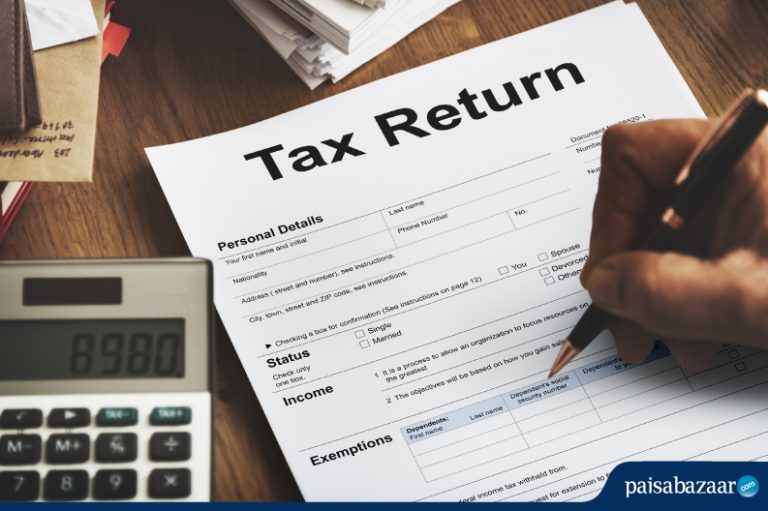
To purchase your dream home, you will need to make a substantial financial investment. If you do not have the funds available, getting a home loan is the best option. A home loan provides you with the necessary funds and gives you a longer tenure to repay the amount. However, getting a home loan has some prerequisites on which the loan approval depends. You will need to provide your vendor with the documents to prove your eligibility as well as creditworthiness. Some of the documents that your vendor may require include banking statements, income tax returns (last three years), salary slips, KYC documents, Form 26 AS and more. The documents may also vary for salaried and self-employed individuals and also on the lender’s requirement.
If you cannot provide any documents deemed necessary by the lender, your home loan application might get rejected. ITR is one such document that a lot of potential home loan applicants remain confused about. Therefore, whether or not ITR is vital for getting a home loan is a question that needs to be addressed.
In this article, we have compiled all the information related to the importance of filing an ITR to avail of a home loan. Read below to know more:
ITR or Income Tax Returns is a form in which the taxpayers file information regarding their earned income and applicable taxes to the Income Tax Department. Depending on the amount and source of income, there are 7 types of ITR forms that must be filled as per your eligibility.

Apply for Home Loan at Attractive Interest Rates Click Here
ITR 1: For individuals with income less than Rs. 50 lakhs from salary, pension, or house property (one).
ITR 2: For individuals with an income of more than Rs. 50 lakhs from salary, capital gains, property (one or more), holding directorship of the company or share of an unlisted company, foreign income/asset.
ITR 3: For individuals earning more than Rs. 50 lakhs from salary, property (one or more), capital gains, foreign income/asset, holding directorship of the company or share of an unlisted company, business/partnership firm.
ITR 4: For individuals with income from ITR 1 and other income of more than Rs 50 lakhs.
ITR 5: This form applies only to LLPs, firms, associations, and bodies.
ITR 6: This form applies to companies not claiming exemption under Section 11.
ITR 7: This form applies to individuals/companies falling under Section 139 (4A), (4B), (4C), (4D).
ITR is important for availing of a home loan because:
Also Check: Current Home Loan Interest Rates
Providing details about IT returns is an important element of the home loan documentation procedure. However, if your requirement is not too high, several private lenders and NBFCs (Non-Banking Financial Companies) now offer loans without ITR.
Even though income is considered as one of the significant factors to determine the loan amount, it is not the only factor that matters. Approval of your home loan application also depends upon several factors such as age, duration of the loan, credit score, credit history, and more. Therefore, some lending institutions have started offering home loans that may not require an ITR.
Apply for Home Loan at Attractive Interest Rates Click Here
When applying for a house loan, you must examine numerous factors, one of which is your ITR record. Make sure to ask your lender if an ITR is required for your home loan application process.
