


CIBIL Score is a 3-digit number ranging from 300 to 900, representing your credit health. It is the numeric summary of your CIBIL report based on your loan repayment history, credit utilization and other factors. A higher CIBIL score (above 760) shows that you are responsible with credit and banks financial institutions would be more confident to extend credit to you.
How to Improve Your Credit Score
Why Check Credit Score on Paisabazaar ?

Check Credit Score from All 4 Bureaus
Track Credit Score Seamlessly Every Month
Read Credit Report in Multiple Languages

4.5/5
15.6L Reviews
6Cr+Satisfied Customers
4Bureau Coverage
800+Cities across India

Check CIBIL Score & Report worth₹1,200Absolutely FREE Chance to get Accidental Cover up to ₹1Lakh & more
Let’s Get Started
4.5/5
15.6L Reviews
6Cr+Satisfied Customers
4Bureau Coverage
800+Cities across India
Why Check Credit Score on Paisabazaar ?
Check Credit Score from All 4 Bureaus
Track Credit Score Seamlessly Every Month
Read Credit Report in Multiple Languages
What is a CIBIL Score?
Why Do You Need to Have a Good CIBIL Score?
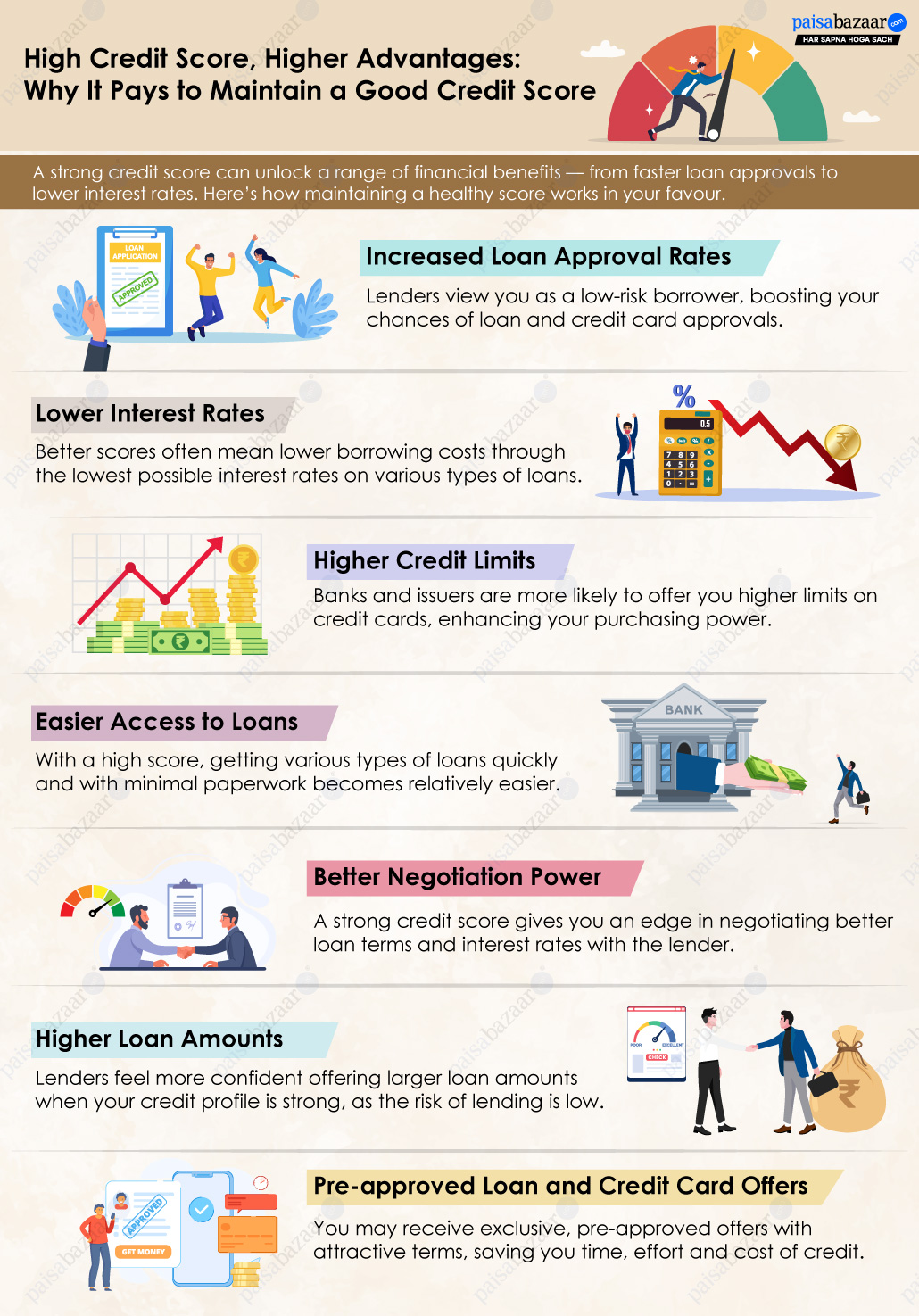
CIBIL Score plays an important role when you apply for any type of credit such as personal loans, credit card, home loan, car loan, etc. Lenders check your CIBIL Score to assess how likely you are to make timely repayments, before they approve your loan. Hence, it is important to maintain a healthy CIBIL Score.
Some of the benefits of a good CIBIL Score are:
More importantly, an excellent credit score gives you better negotiating power for better loan terms, pre-approved offers, or reduced processing charges.
Common Reasons for a Low CIBIL Score
Some of the most common reasons of a low CIBIL Score are:
How to Increase Your Credit Score Quickly and Effectively?
Discover practical tips to increase your CIBIL Score & Credit Score from 600 to 800 fast, fix common credit mistakes, and build a stronger financial profile for best loan & credit cards offers.
6 Steps-By-Steps Ways to Increase Your Credit Score from 600 to 750
The only way to rebuild and improve your CIBIL score online is through correcting any financial mistakes and making responsible choices in the future. Here are 6 proven methods you can employ to increase a low credit score naturally:
Step 1: Check Your CIBIL Report to Find the Root Cause
Your credit score by CIBIL is influenced by multiple factors and each factor requires a different remedial action. So, before taking any corrective action, the first step towards improving your CIBIL score should be to review your CIBIL report in detail to find the root cause.
Common reasons for a low CIBIL score include:
Once you identify which of these issues applies to you, you can work on improving your CIBIL score in a focused manner by taking the necessary steps to rectify the issue.
Avail Paisabazaar's Credit Health Pro Service to get personalized credit assistance. Our credit expert will call and analyze your credit report and suggest personalised solutions to build further or improve your credit score.
Step 2: Pay Your Dues Timely
If your low credit score is due to payment-related issues, then it is advised to address and resolve them first. Your payment history has one of the highest impacts on your CIBIL score as this lets the lenders know how likely you are to repay the borrowed money. Missed loan EMIs or delayed credit card bill payments are recorded in the Days Past Due (DPD) section of your credit report and stay for up to 36 months which negatively affects your score. Hence, to improve your CIBIL score, you can take the following measures:
Consistent on-time payments over the next few months can significantly help to improving your CIBIL score very fast & quickly.
If you tend to forget bill due dates, set standing instructions to auto-pay your bills as and when due or set reminders. A smart way to ensure timely credit card bill payment is to use Paisabazaar Bill Payment App where you can add all your credit cards and manage repayments easily. You receive alerts when a new statement is generated and when bills are due.
Read in Detail: Download Your CIBIL Report Online
Step 3: Reduce High Credit Utilisation
If you regularly max out your credit limit can make you look credit hungry and could lower your credit score. You may also struggle to make full repayment of your monthly card dues by the due date because of high credit usage. In such a case, reducing your credit utilisation ratio (CUR), that is the credit amount used in relation to the credit limit available, so that it stays within your monthly budget is recommended. A lower credit utilisation can signal a responsible credit behaviour and help boost your CIBIL score gradually.
To lower your CUR, avoid putting high-ticket purchases on your credit cards for some time. You can also request a limit increase on your credit cards or get a new credit card to increase your overall available limit. But be mindful that you do not utilise the additional limit.
Read in Detail: What is a Credit Score
Step 4: Limit Multiple Credit Applications Within A Short Duration
When you apply for a personal loan or credit card, the lenders initiate a hard enquiry on your credit profile, which can temporarily decrease your CIBIL score. However, multiple hard enquiries within a short time span can indicate credit-hungry behaviour and, as a result, lower your credit score. You must follow below mentioned steps to build your credit score:
Fewer credit enquiries help stabilise and improving your CIBIL score online.
There are two types of credit enquiries - soft enquiries and hard enquiries. When you check your own credit score to stay credit-aware, it is considered a soft-enquiry and has no impact on your credit score. In contrast, a hard enquiry is made when a lender or credit card issuer pulls your CIBIL report as part of a credit application.
Read in Detail: Credit Score Ranges
Step 5: Correct Errors in Your CIBIL Report
Even if you have maintained a good credit history, an error in your credit report that goes unnoticed can cause major damage to your credit score. This could include loans shown as active even after closure, incorrect personal information, wrong account details, mismatched overdue or paid-off amounts, duplicate accounts, etc. So, you must review your detailed credit health report every month on Paisabazaar Credit Score App, and if you spot any suspicious activity or discrepancy, follow the steps below:
Once the errors in your credit report are fixed, your CIBIL score can significantly improve automatically.
Avail Paisabazaar's Credit Health Pro Service for assistance in identifying errors in your credit report and to get them rectified at the earliest through our Credit Rectification Service.
Read in Detail: Found an Error in your Credit Report? Here's How to Raise a Grievance
Step 6: Build Credit If You Have Limited Credit History
Consumers with a longer credit history and a consistent record of timely repayments are trusted by the banks as well as bureaus. Hence, if you are new-to-credit or have a poor credit score, it is best to start as early as possible and build a positive track record to raise your CIBIL score by following the below-mentioned advice:
New-to-credit consumers or those with a poor credit score can get a secured credit card against FD to build or rebuild their score. A secured credit card is offered against a fixed deposit and hence approval is guaranteed. It works exactly like an unsecured card wherein you can make purchases and earn value-back in the form of rewards or cashback. Secured card activity is reported to credit bureaus and with responsible usage, you can improve your credit score.
Mistakes to Avoid While Building Your Credit Score
When building or improving your credit score, some actions can slow down your progress. Here are a few such mistakes that you must avoid:
- Missing Payment Due Dates - Always pay your dues on or before the due date.
- Maxing Out Your Credit Cards - Consistently using most or all of your available credit limit can lower your score, even if you pay your bills on time.
- Applying for Too Many Loans and Cards in a Short Span - This results in multiple hard inquiries, which may reduce your score.
- Closing Old Credit Cards Unnecessarily - Older credit accounts increase the average age of your credit history. Closing them may reduce your available credit and lower your score.
- Ignoring Errors in Your Credit Report - Incorrect information can negatively impact your score. Regularly checking your credit report helps you identify and correct such issues promptly.
- Settling Loans Instead of Repaying in Full - A "settled" status indicates that the lender accepted less than the outstanding amount, which can adversely affect your credit score.
- Becoming a Loan Guarantor Without Careful Consideration - If the primary borrower misses repayments, it may affect your own credit score as well.
Bottomline
Improving your CIBIL score fast is not possible through quick shortcuts, rather it requires identifying the root cause and taking targeted corrective steps to rectify the issues hurting your credit score. Moreover, this process is not instant and visible improvement can take few months of corrective action. More severe issues, like defaults or settlements may take longer, but consistent discipline always works in your favour. Therefore, you should check your free credit score regularly to understand your score improvement trajectory. You can witness the credit score improving from 600 to 800 if the pointers mentioned above are followed in a disciplined manner.
A better CIBIL score doesn't just improve loan approvals but also helps you secure lower interest rates, higher credit card limits, and faster approvals in the long run for instant business loan. Whereas a low credit score can act as a major hindrance for those looking for credit urgently.
How to Check CIBIL Score for Free with Paisabazaar?
Step 1: Enter your mobile number
Step 2: Verify your number using the OTP
Step 3: Enter your PAN and basic details
Step 4: View your free credit score and get detailed credit report
How to Check CIBIL Score for Free with Paisabazaar?
Step 1: Enter your mobile number
Step 2: Verify your number using the OTP
Step 3: Enter your PAN and basic details
Step 4: View your free credit score and get detailed credit report
FAQs
What is a good credit score?
A credit score above 750 is generally considered good and improves your chances of approval for loans and credit cards.
What is the fastest way to improve my credit score?
When it comes to credit score improvement, the quickest wins come from first identifying the cause of reduced score and then employing targeted remedial measures. For instance, if your credit score is low due to delayed payments then paying off your dues in full timely month over month would be the best step to take after clearing off any outstanding balance. Also, avoid maxing out your credit cards as this may signal irresponsible credit behaviour to the bureaus.
Does checking my credit score reduce it?
No, checking your own credit score is considered soft enquiry and has no impact on your credit score.
How to increase CIBIL score in 30 days?
There is no guaranteed way to significantly improve your CIBIL score in 30 days. Building a strong credit score or improving a poor credit score may take several months of timely bill payments and disciplined credit usage.
Which are the best Secured Credit Cards to build Credit Score faster?
Some of the best secured credit cards for building your credit score are SBM Bank Paisabazaar Paisa Plus, Utkarsh SuperCard RuPay Credit Card, SBM ZET Credit Card and IDFC FIRST Earn Credit Card.
Can I improve my score if I’ve defaulted on a loan before?
Yes. While loan defaults have a considerable impact on your credit score leading to a major drop, you can still improve your score by clearing your past dues and consistently paying your loan EMIs and credit card bills on time. When working on improving your credit score after default, it is advised to maintain a low utilization ratio and avoid applying for too many loans or cards.
How to Improve CIBIL Score before Applying for a Loan?
If you have a low credit score, it is advisable to improve it before applying for a new loan. For this, you must check your credit report thoroughly and understand why your score is low and work on it. For example, if you have missed or delayed credit card bill payments, you should start making timely payment for at least a few months before applying for a new loan.
Does increasing my credit card limit help my score?
Yes. Provided your spending remains the same, increasing your credit card limit reduces your overall credit utilization ratio (CUR), which positively affects your credit score.
How do I correct errors in my CIBIL report?
If you notice errors in your credit report, you should immediately file a complaint with the concerned credit bureau and lender. For example, if your closed loan with HDFC Bank is still showing active on your CIBIL credit report, you should raise it with CIBIL as well as HDFC Bank. Once the error is verified and corrected, your credit score may improve if the inaccurate information had negatively impacted it.
How to increase CIBIL score immediately?
There is no instant way to increase your CIBIL score. It usually takes several months to improve your CIBIL score through responsible usage. However, if you found an error and got it rectified, you may see a jump of several points.
Credit Score Articles

Delayed Credit Score Correction? RBI’s Compensation Framework Explained

Sumit Kumar12 Jun 2026

Does the Length of Your Credit History Affect Your Credit Score

Vandana Punj27 May 2026

I Have 4 Credit Cards and 2 Loans: How to Maximize My Credit Score?

Lepakshi Phogat26 May 2026

How to Manage Multiple Loans Without Hurting Your Credit Score

Neha Singh18 May 2026

How Can Students Build Their Credit Scores Without Income Proof?

Bharti18 May 2026

How Self-Employed Can Build Credit Score

Rupanshi Thapa12 May 2026

How Credit Utilization Ratio Works and What Percentage Should I Maintain

Sushmita Mishra12 May 2026

Why Did My CIBIL Score Drop Without any Reason?

Arvind Kumar08 May 2026

Why Minimum Due Payments Hurt Your Credit Score

Shruti Sharma06 May 2026

Not All Accounts Count: What Impacts Your Credit Score—and What Doesn’t

Samridhi Srivastava05 May 2026
Disclaimer
Paisabazaar is a loan aggregator and is authorized to provide services on behalf of its partners
*Applicable for selected customers


Check Credit Score for FREE