Airport Lounge Access


Most issuers check your credit score and repayment history before approving a credit card application. If you have never taken a loan or used a credit card before, you may have no credit history or a low credit score. As a result, issuers may consider you a high-risk applicant and reject your application for a regular credit card.
What is an FD-backed Credit Card?
An FD-backed credit card, also known as a secured credit card, is issued against a Fixed Deposit (FD). The FD acts as collateral for the issuer in case you default on any payment. In simple terms, you create a fixed deposit with the card issuer, and they issue a credit card against that FD. With FD-backed credit cards, the credit limit is linked to the FD amount, and some issuers may offer up to 100% of the FD amount as the credit limit.
For example, if you open an FD of Rs. 5,000, you may get a credit limit ranging from Rs. 4,000 to Rs. 5,000, depending on the issuer.
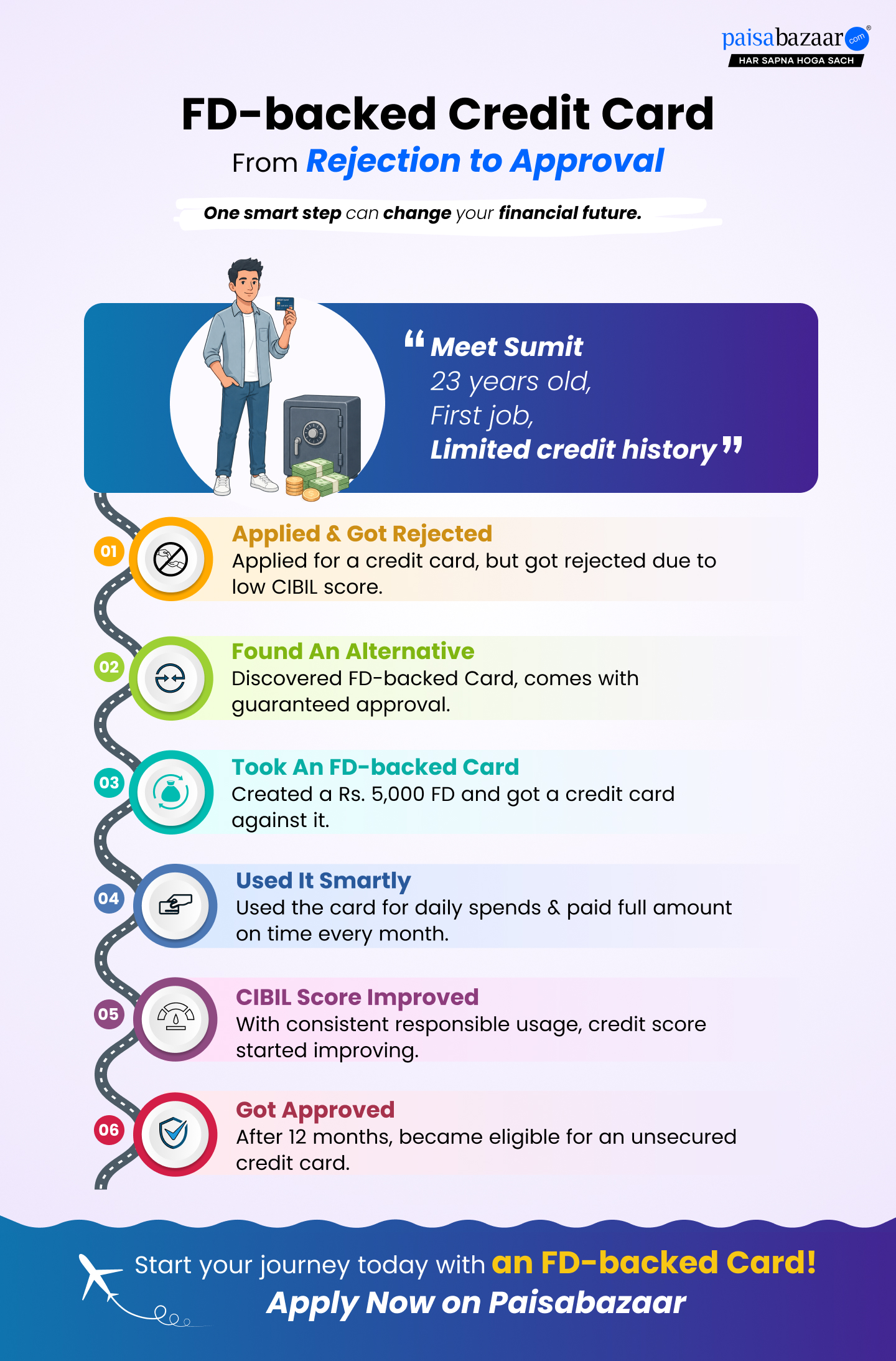
The Real Credit Journey: From Rejection to Approval
Many consumers follow a journey similar to this:
Step 1: Credit Card Application Gets Rejected
A consumer applies for a regular credit card but gets rejected due to a low credit score, no credit history, or limited income records. This is often the starting point for many first-time credit users.
Step 2: Discovering FD-backed Credit Cards
After researching alternatives, they learn about secured credit cards that offer easier approval, low or no income requirements, and credit-building opportunities. Since these cards are backed by an FD, they usually come with guaranteed approval.
Step 3: Opening an FD and Getting a Card
The applicant creates a fixed deposit and receives a credit card against it. FD-backed credit cards can be availed against an FD starting from as low as Rs. 500, depending on the issuer. You should choose the FD amount based on your budget and repayment capacity.
Step 4: Using the Card Responsibly
The most important part of the journey is responsible credit usage. This includes using the card regularly for daily expenses, paying bills on time, paying the total amount due, and keeping credit utilization low. These habits help build a positive repayment history and improve your credit profile over time.
Step 5: Credit Score Starts Improving
Over time, the responsible usage of the FD-backed credit card gets reported to credit bureaus like CIBIL. As a positive repayment history builds, the credit score may gradually improve. Typically, consumers may start seeing improvements within 6 to 12 months, depending on their spending and repayment behaviour.
Step 6: Becoming Eligible for Unsecured Credit Cards
Once you build a strong credit score, typically above 750, issuers may start approving your applications for entry-level unsecured credit cards offering basic benefits like rewards or cashback. This is how an FD-backed credit card can act as the first step towards building a stronger credit profile and unlocking better financial opportunities in the future.